
Last Updated: November 3, 2026
Quick Summary
A windshield protection plan is a service contract that pays for repairing or replacing your windshield when it’s damaged by a covered event, usually without the deductible hit of an insurance claim. Most plans cover rock chips and cracks from road debris, and the administrator decides whether repair or replacement applies.
- A protection plan covers glass damage, while a vehicle protection plan covers mechanical breakdowns.
- Pre-existing damage, collision damage, vandalism and cosmetic pitting are commonly excluded.
- You don’t have to return to the selling dealership to start a claim.
- Ask whether ADAS recalibration is included in the replacement authorization.
- Direct billing means the provider invoices the administrator, so you pay only your deductible.
Table of Contents
- What a Windshield Protection Plan Actually Covers
- Windshield Protection Plan vs. Auto Insurance: Key Differences
- The Dealer Windshield Warranty Claim Process, Step by Step
- Contact A to Z Auto Glass directly. Ask them to initiate the claim on your behalf.
- How Direct Billing for Auto Glass Works
- Mobile Windshield Repair Services: What to Expect On-Site
- Repair or Replace? A Cost and Safety Decision Framework
- Start Your Windshield Claim with A to Z Auto Glass
- Frequently Asked Questions
What a Windshield Protection Plan Actually Covers
A windshield protection plan is a service contract that pays for repairing or replacing your windshield when it’s damaged by a covered event, usually without the deductible hit of an insurance claim.
Most plans fall into two groups. Dealer-sold plans are typically administered by a third-party warranty company, and the paperwork names that administrator, not the dealership. Knowing which type you hold tells you who authorizes the work.
Here’s the practical distinction that matters: a protection plan covers glass damage, while a vehicle protection plan covers mechanical breakdowns. They are separate products, and one does not pay for the other.
National Association of Insurance Commissioners consumer guide to auto insurance
What’s Typically Included
Read the covered-perils list on your contract before anything else. Most plans spell out the events they pay for, and the pattern is fairly consistent across administrators:
- Rock chips and cracks from road debris. The core of most plans.
- Repair first, replacement when repair fails. Nearly every contract states that the administrator decides which path applies.
- Damage from road hazards such as gravel kicked up by a truck, construction debris, or a stray object on the highway.
- ADAS recalibration on some plans. Check this carefully, because camera and sensor recalibration after a replacement can be a separate charge or excluded entirely depending on the administrator.
What’s Usually Excluded
The exclusions page is where claims get decided, so read it once before you need it. Common carve-outs include:
- Pre-existing damage that predates the plan’s start date or a prior claim.
- Damage from a collision that a separate auto policy should cover.
- Intentional damage, vandalism, or damage from misuse.
Repair vs. Replacement: Where the Plan Draws the Line
Nearly every plan prefers repair over replacement because it costs the administrator less. A minor crack or chip that can be filled with resin usually gets approved without argument. Once damage spreads into the driver’s line of sight, or a crack runs past the edge of the glass, replacement becomes the only safe option and the plan shifts into a different approval track.
Watch out: driving on a chip for weeks lets moisture and dirt work into the break, and a contaminated chip often can’t be repaired cleanly.
The Out-of-Pocket Math Most Guides Skip
The reason to understand coverage in detail is that it determines whether the plan actually saves you money. Compare two paths for the same chip:
- Pay out of pocket for a resin repair. A single chip repair is one of the least expensive auto glass services you can buy, and many drivers simply pay it rather than involve a plan or an insurer.
- Use the plan. The repair is covered, but you may still owe a deductible or a per-claim service charge, and the claim goes on the plan’s record.
The math flips for replacement. A full windshield replacement, especially on a vehicle with ADAS cameras that need recalibration, is a much larger expense, and that’s where a plan earns its keep. The practical rule: use the plan for replacement-scale events, and weigh the deductible against a cash repair for small chips.
Windshield Protection Plan vs. Auto Insurance: Key Differences
The two products overlap, but they solve different problems. Comprehensive coverage on an auto policy handles glass damage, yet many drivers hesitate to file because of the deductible and the fear of a rate increase. A protection plan usually sidesteps both.
|
Feature |
Windshield Protection Plan |
Auto Insurance |
|---|---|---|
|
Deductible |
Often low or none |
Typically applies |
|
Effect on premiums |
None |
Possible at renewal |
|
Approval speed |
Usually fast, administrator-authorized |
Adjuster-dependent |
|
Covers rock chips |
Yes, commonly |
Yes, under comprehensive |
|
Covers mechanical issues |
No |
No, that’s a separate policy |
If you’re weighing whether to file a glass claim through your insurer instead, it helps to understand whether filing a glass claim affects your insurance rates before you call.
A common mistake is assuming a plan replaces insurance. It doesn’t. Keep comprehensive coverage for the big events and let the plan absorb the small, frequent ones.
The Dealer Windshield Warranty Claim Process, Step by Step
The dealer windshield warranty claim process is simpler than most drivers expect, and you don’t have to return to the selling dealership to start it. Here’s how we walk customers through it:
- Find your plan paperwork. Locate the administrator name, contract number, and term length.
Contact A to Z Auto Glass directly. Ask them to initiate the claim on your behalf.
- Authorize the damage assessment. A technician inspects the glass and documents the damage type, location, and size.
- Get approval from the administrator. The provider submits the findings; the plan approves repair or replacement.
- Schedule the work. Once approved, installation or repair is booked, often at your home or workplace.
We accept dealer plans from multiple administrators, including Veritas Global, Perma, and Crystal Glass warranty. You don’t need to chase the warranty company yourself; reach out to us and we’ll start the claim and handle the back-and-forth.
Why Claims Get Denied
Denials almost always trace back to paperwork gaps rather than bad luck. The most frequent reasons we see:
- Damage that predates the plan’s start date
- A lapsed term or missed payment on a subscription plan
- Damage from an excluded event, such as a collision the policy doesn’t cover
Read the exclusions page once, before you need it.
Free Quote or Schedule Service →
How Direct Billing for Auto Glass Works
Direct billing for auto glass means the glass provider invoices the plan administrator directly, so you don’t pay the full cost upfront and wait for a reimbursement check. The provider and the administrator settle the approved amount between them, and you’re responsible only for any deductible or non-covered portion your contract specifies.
This is where a lot of drivers get surprised. Ask one question before booking: “Do you bill the warranty company directly?”
Mobile Windshield Repair Services: What to Expect On-Site
Mobile windshield repair services bring the shop to your driveway or workplace parking lot, which is the whole point for anyone who can’t lose a day to a service visit. Here’s what actually happens.
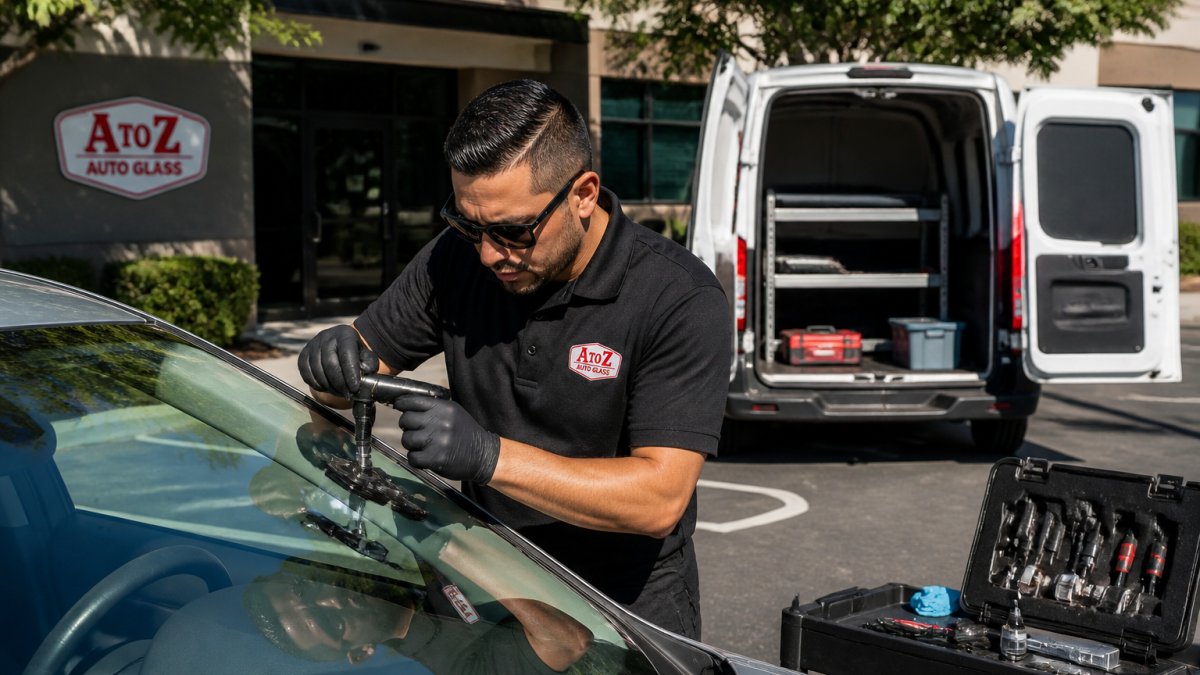
The technician arrives at your location, inspects the damage, confirms it matches the approved claim, and sets up a clean work area.
ADAS Calibration and the Mobile Visit
If your vehicle has lane-keeping assist, automatic emergency braking, or adaptive cruise control, the camera behind the windshield has to be recalibrated after replacement. Skip that step and those safety features can misread the road.
Ask before booking whether on-site calibration is available for your vehicle.
Repair or Replace? A Cost and Safety Decision Framework
Use this framework to decide, rather than guessing:
- Chip smaller than a quarter, outside your line of sight: repair. Fast, inexpensive, and usually covered.
- Crack longer than a dollar bill: replacement. Repair won’t hold structural integrity.
- Damage in the driver’s primary viewing area: replacement, regardless of size.
For a current quote, contact us directly. You can also review our windshield cost guide to understand what drives your quote. Pricing depends on your vehicle and the work required.
Safety first: a crack compromises how the windshield supports the roof in a rollover and how the passenger airbag deploys.
The Cost-Benefit Comparison: Cash Repair vs. Plan Claim
Most guides tell you when to repair and when to replace. Fewer tell you whether to route the job through your plan at all.
- Small chip, cash repair. A resin repair is one of the lowest-cost auto glass services available, and paying cash keeps the claim off your plan’s record. If your contract carries a deductible or per-claim charge, the cash repair can cost less than filing.
- Small chip, plan claim. Covered, but you may owe the deductible or service charge, and the claim is logged. Worth it only if the contract has no deductible or the chip is in a spot where repair is uncertain.
- Replacement, cash. A full replacement, particularly with ADAS recalibration, is a substantial expense. Paying cash here is rarely the better financial move if you hold a plan that covers it.
The Hidden Cost: ADAS Calibration After Replacement
This is the part of the decision competitors consistently miss.
Recalibration is a real cost, and whether your plan covers it depends entirely on the contract. Some administrators include it in the replacement authorization; others treat it as a separate line item or exclude it.
Not every shop can perform calibration on-site, either. If you want the details on how the process works and what affects timing, see our guide to mobile ADAS calibration service.
A Note on State Lines and Road Trips
Coverage terms can vary when damage happens away from home. Some plans authorize work through a national network of providers, while others require you to use a participating shop or file for reimbursement after the fact. If you drive across state lines regularly, confirm how the administrator handles out-of-area claims before you need it.
Start Your Windshield Claim with A to Z Auto Glass
You don’t have to decode your plan paperwork alone. Send us a photo of the damage and your contract details, and we’ll tell you what your plan covers and get the claim moving.
We’ve been serving drivers for 25 years, and we bring free on-site mobile service to your home or workplace, with transparent pricing and no hidden fees.
Best for: drivers holding a dealer or aftermarket windshield protection plan who want the claim handled for them. Skip if: your damage is a mechanical or structural issue outside the glass, which a protection plan won’t cover.
Schedule Now to book your appointment.
Frequently Asked Questions
Is it worth getting a windshield protection plan?
It depends on your risk and your vehicle. A windshield protection plan makes the most sense if you commute daily on highways where rock chips are common, drive a newer vehicle with driver-assist cameras behind the glass, or want predictable costs instead of surprise out-of-pocket expenses. Modern windshields with ADAS features cost more to replace and often need recalibration, so a plan can offset a larger bill than it would have on an older car. Read the term length, deductible, and exclusions before you enroll.
Can I use my dealer windshield warranty at an independent shop?
Often yes, but it depends on the plan administrator. A to Z Auto Glass works with several dealer windshield protection plan providers, including Veritas Global, Perma, and Crystal Glass warranty. You reach out, we start the dealer windshield warranty claim process for you, and we handle the paperwork with the administrator. Confirm your plan allows an independent shop before scheduling, since some plans restrict where repairs can be done.
How does direct billing for auto glass work?
With direct billing, the glass shop bills your warranty or plan administrator instead of collecting the full amount from you at the time of service. You typically pay only your deductible or any amount your coverage limits exclude. A to Z Auto Glass offers direct billing alongside free mobile service, so the technician comes to your home or workplace, completes the repair or replacement, and the billing is handled between the shop and your plan provider.
What does a windshield protection plan cover that insurance might not?
A windshield protection plan is a service contract, not an insurance policy. It usually focuses on glass damage like rock chips, cracks, and stress cracks, and may include cosmetic repairs that insurance would not pay for. Insurance may cover replacement under comprehensive coverage but often applies a deductible and can affect your claims history. Plans also differ on OEM glass versus aftermarket glass, so check coverage limits and policy exclusions in your contract.
Your windshield is a safety component, not a cosmetic one, and a plan only helps if you actually use it. Reach out to A to Z Auto Glass with your plan details, and we’ll start the claim, arrange free mobile service, and get you back on the road with glass you can trust.
