

Table of Contents
- What Is Covered Under Auto Glass Warranty Coverage
- Lifetime Warranty vs Limited Warranty
- Workmanship Defects and Material Failure
- What Voids a Windshield Warranty
- Windshield Replacement Insurance Coverage
- Windshield Stress Crack vs Impact Crack
- How to File a Warranty Claim
- Conclusion
- Frequently Asked Questions
Last Updated: September 4, 2026
Auto glass warranty coverage explained in plain terms is the difference between paying for a second repair out of pocket and getting a defect fixed at no cost. A warranty is a written promise from the installer or manufacturer that they will correct specific types of failures within a set period. At A to Z Auto Glass, we have spent 25 years helping drivers in Aurora and Parker understand exactly what their protection includes, because most people only read the fine print after a problem appears.
The core of any auto glass warranty coverage agreement is simple: it protects you against defects in materials or workmanship, not against damage caused by road debris or accidents. Understanding that single distinction answers most questions before you even call the shop. Below, we break down what is covered, what voids protection, and how to file a claim successfully the first time.
What Is Covered Under Auto Glass Warranty Coverage
Auto glass warranty coverage is a guarantee from the installing shop or the glass manufacturer that the replacement will perform correctly for a defined service life. Coverage typically includes failure of the urethane adhesive bond, water leaks around the seal, wind noise caused by improper fitting, and distortion or optical defects in the glass itself. If the installation fails structurally, such as the glass lifting from the frame, the warranty requires the installer to correct it at no additional cost.
Most warranties also cover the hardware attached during replacement, including molding clips, weather stripping, and rearview mirror buttons. However, the scope differs sharply between a lifetime warranty from a local shop and a limited warranty tied to a specific part. A common mistake is assuming the car manufacturer’s warranty covers replacement glass. It does not, unless the glass was installed at the factory and fails due to a manufacturing defect.
Lifetime Warranty vs Limited Warranty
A lifetime warranty sounds like the best option, and for workmanship defects it usually is. The installer promises that as long as you own the vehicle, they will repair any leak, bonding failure, or installation error at no charge. The catch is that lifetime coverage is only as good as the company behind it, so it pays to confirm the shop has been in business long enough to honor that promise.
A limited warranty, by contrast, caps coverage by time, mileage, or both. You might see a one-year or 12,000-mile limit on materials, with workmanship covered for a shorter window. Limited warranties are common when aftermarket glass is used or when the claim involves a specific component like a defroster grid. The table below summarizes the practical differences.
|
Warranty Type |
Typical Coverage |
Key Limitation |
Best For |
|---|---|---|---|
|
Lifetime workmanship |
Leaks, bonding, installation errors |
Requires installer to stay in business |
Long-term vehicle owners |
|
Limited materials |
Glass defects, optical distortion |
Mileage cap or expiration date |
Budget replacements |
|
Manufacturer defect |
Stress cracks, material failure |
Excludes impact damage |
OEM glass verification |
Workmanship Defects and Material Failure
Workmanship defects are errors made during installation, and they are the most common reason a valid claim succeeds. Signs include water ingress around the edges, wind noise at highway speed, molding that sits uneven, or glass that sits too high or low in the frame. A proper installation leaves a uniform gap and a smooth urethane bead. If you notice any of these issues within the warranty period, document them with photos and contact the installer immediately.
Material failure is different. It means the glass itself was defective from production, such as a stress crack that appears spontaneously from the edge without an impact point, or delamination where the layers separate. Bonding failure, where the adhesive releases from the glass or the frame, falls under workmanship when caused by improper surface preparation. The distinction matters because a warranty claim for material failure often requires the installer to send photos to the glass manufacturer for approval, which can add days to the process.
What Voids a Windshield Warranty
A warranty can be voided in two ways: through actions you take that breach the terms, and through circumstances that fall outside coverage scope. Understanding the difference prevents costly claim denials.
Actions that void coverage:
Having the vehicle serviced or modified by anyone other than the original installer is the fastest way to void a windshield warranty. Many warranties explicitly state that any repair, including a simple chip repair, must be performed by the installing company or an approved auto glass technician. A second shop touching the glass often voids the remaining coverage because the original installer cannot verify the quality of the follow-up work and cannot guarantee the structural integrity of the bond.
Using harsh chemical cleaners that degrade the urethane bond, operating the vehicle before the adhesive has fully cured (typically 24 hours), and failing to address a small chip that later spreads into a large crack also void coverage (astm.org). Some warranties require you to report defects within a specific window, often 30 days, so delaying a claim can result in denial even if the defect occurred during the warranty period.
Circumstances that are never covered:
Damage from an accident, vandalism, or severe weather is never a warranty matter; it is an insurance claim. A mileage cap or expiration date also voids coverage once exceeded, so check your paperwork rather than assuming lifetime means unlimited. If your vehicle is involved in a collision and the windshield shifts or cracks as a result, that damage is not a defect, it is impact damage, and your comprehensive insurance policy is the appropriate remedy.
Why claims get denied:
Beyond explicit voiding actions, claims are rejected for three reasons that appear nowhere on the warranty document but are enforced consistently. First, improper maintenance: if you have not kept the vehicle in reasonable condition or have ignored a known defect for months, the installer may argue the damage is secondary to neglect. Second, lack of documentation: if you cannot produce the original invoice or warranty certificate, many shops will deny the claim outright because they cannot verify the installation date or coverage terms. Third, modification to the vehicle: if you have had the windshield tinted, had aftermarket sensors installed, or had the frame welded or repaired, the installer may deny a claim by arguing that the modification caused the failure, not the original installation.
Windshield Replacement Insurance Coverage
Windshield replacement insurance coverage operates entirely separately from a warranty. A warranty covers defects; insurance covers new damage. In most states, a comprehensive coverage policy includes glass repair, and many carriers waive the insurance deductible for chip repair because fixing a small chip is far cheaper than replacing the whole windshield. Full replacement, however, typically requires you to pay the deductible unless your state mandates a zero-dollar glass endorsement.
A key distinction is that your insurance claim does not void your installer’s warranty. You can use your insurance to pay for the replacement and still keep the lifetime workmanship warranty from the shop. However, you should confirm whether your policy covers OEM glass or only aftermarket glass. Some insurers will only pay for aftermarket glass unless your policy includes an OEM endorsement, and using aftermarket glass can affect the fit of ADAS sensors.
Windshield Stress Crack vs Impact Crack
A stress crack starts at the edge of the glass and travels inward without any point of impact, often caused by temperature swings, frame pressure, or a tiny manufacturing flaw. An impact crack begins with a visible chip or bullseye where a rock or debris struck the glass. Telling the difference matters because a stress crack may qualify as a material failure under warranty, while an impact crack is an insurance claim.
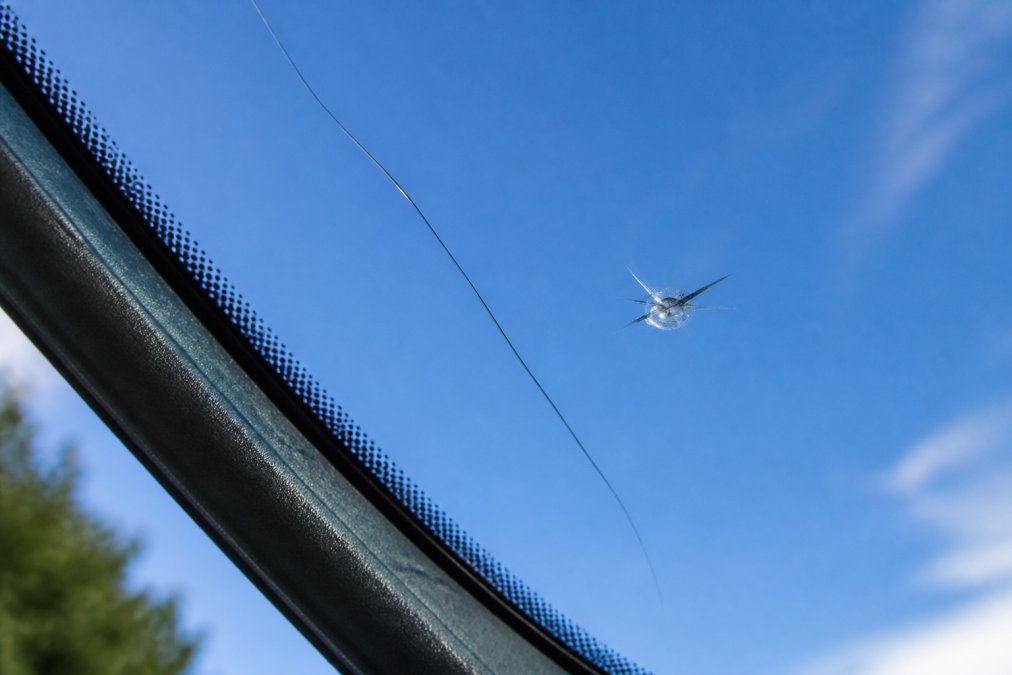
To tell them apart, run your fingernail over the origin point. An impact crack has a rough divot where the object hit. A stress crack is smooth along its entire length and typically starts within a half-inch of the glass edge. If you are unsure, a technician can identify the type quickly. Filing a warranty claim for an impact crack wastes everyone’s time; filing an insurance claim for a stress crack may cost you a deductible you do not owe.
How to File a Warranty Claim
Filing a warranty claim starts with your paperwork. Locate the original invoice, the warranty certificate, and proof of purchase, then contact the installing shop before scheduling any other glass work. Most reputable shops will inspect the vehicle first to confirm the defect falls under coverage before any repair begins. Do not attempt a repair elsewhere or allow another technician to examine the glass; doing so can be used as grounds for denial.
Documentation checklist:
Before you call the shop, gather the following items in a single file or folder:
- Original installation invoice with the date, vehicle identification number (VIN), and glass type (OEM or aftermarket)
- Warranty certificate or card with coverage terms, expiration date, and mileage limits
- Proof of purchase (receipt or credit card statement)
- Photos of the defect taken in natural light, showing the origin point and the full extent of the failure
- Written description of when the problem appeared and under what conditions (e.g., “noticed wind noise at highway speed on September 2, 2026”)
- Any communication with the shop (emails, text messages, service records)
Having this documentation ready before you call dramatically increases the likelihood of approval because you can answer the inspector’s questions immediately and prove the installation date.
Filing the claim and handling disputes:
Call the shop and describe the defect clearly. Schedule an inspection appointment and ask the inspector to document their findings in writing. If the shop approves the claim, confirm the repair date and whether you need to leave the vehicle or if mobile service is available.
If the shop denies the claim, ask for the denial in writing and request the specific warranty clause they are relying on. Do not accept a verbal denial. Once you have the written denial, review your warranty document against their stated reason. Many states have consumer protection laws that require warranties to be honored as written and prohibit unreasonable restrictions on coverage. If you believe the denial is improper, contact your state’s attorney general consumer protection division or file a complaint with the Better Business Bureau. In many cases, the threat of a formal complaint is enough to prompt reconsideration.
Conclusion
Understanding auto glass warranty coverage explained here gives you the use to avoid paying twice for the same failure. Read the warranty before you agree to the installation, know whether you have lifetime or limited coverage, and document every defect immediately. When you need a replacement you can trust, A to Z Auto Glass provides free on-site mobile service in Aurora and Parker with transparent pricing and thorough inspections backed by 25 years of experience. Schedule your appointment online and get a windshield that is safe, road-ready, and covered.
Frequently Asked Questions
What does a typical auto glass warranty cover?
Auto glass warranty coverage typically includes defects in materials and workmanship for a specified period. This covers issues like bonding failure, leakage, molding problems, and installation errors. Coverage duration varies—lifetime warranties cover the vehicle’s ownership period, while limited warranties last for a defined period. Most warranties exclude damage from accidents, improper maintenance, or aftermarket modifications. Check your specific warranty documentation for exact coverage limits, mileage caps, and expiration dates.
What voids a windshield warranty?
Common warranty voidance includes improper maintenance, aftermarket modifications, accidents or impact damage, and neglecting recommended care instructions. Extreme temperature changes, using non-OEM glass, and structural issues unrelated to the glass itself can also void coverage. If installation errors caused the damage, the installer’s warranty may still apply. Some warranties exclude damage from road debris or stress cracks. Always review your warranty terms and maintain documentation of all service performed to protect your coverage.
Does insurance cover windshield replacement?
Yes, comprehensive auto insurance typically covers windshield replacement and chip repair. Most policies include glass coverage with a deductible. Some insurers waive the deductible for repairs versus replacements. Coverage depends on your specific policy—review your comprehensive coverage details. Insurance does not cover damage from normal wear or pre-existing conditions. Filing a claim may not raise your premium, but check with your insurer. Manufacturer warranties and insurance coverage are separate, so you may have dual protection depending on your vehicle’s age and your policy terms.
What’s the difference between a stress crack and an impact crack?
Stress cracks radiate from the edge of the windshield and often appear without visible impact; they result from temperature changes or structural pressure. Impact cracks form from object collision and typically show a defined chip or bullseye pattern at the strike point. Stress cracks may not be covered under standard warranties, while impact damage coverage depends on your insurance or service provider warranty. Understanding the crack type helps determine whether warranty coverage applies and whether repair or replacement is necessary. Professional technicians can identify crack types during inspection.
This article was written using GrandRanker