

Table of Contents
- Step-by-Step Guide to Measure Windshield Crack Size Accurately
- Windshield Repair Size Limits and Types of Windshield Cracks
- Windshield Crack Repair vs Replacement: Making the Call
- Frequently Asked Questions
Last Updated: September 16, 2026
Step-by-Step Guide to Measure Windshield Crack Size Accurately
Measuring windshield crack size takes about five minutes with a ruler or measuring tape (millimeter markings), a permanent marker, and a clean microfiber cloth; calipers give a more precise chip diameter reading. At A to Z Auto Glass, the difference between a repairable chip and a full replacement comes down to two numbers: length and diameter.
- Park in shade and let the glass cool; temperature swings distort readings and can spread damage.
- Clean the area to see the true edges.
- Identify the damage type: bullseye, star break, edge crack, or stress crack.
- Measure crack length end to end in millimeters, then chip diameter at its widest point.
- Mark the endpoints to track growth.
- Note the location relative to the driver’s line of sight.
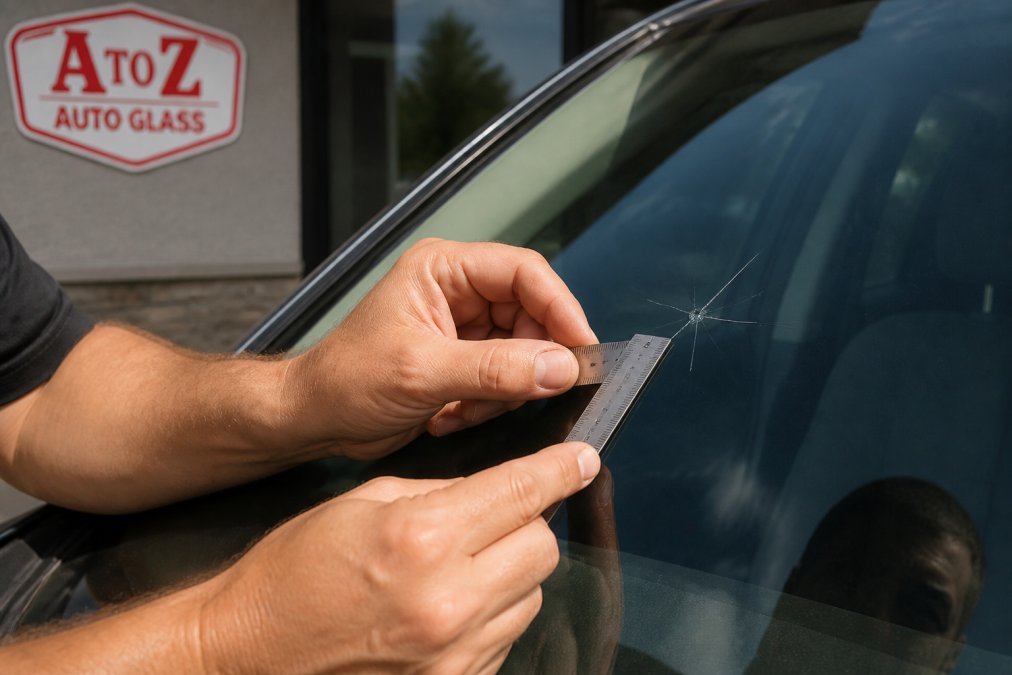
Measure in the coolest part of the day. A crack that reads 20 mm at 7 a.m. can measure noticeably longer by mid-afternoon once the glass heats up in direct sun.
Windshield Repair Size Limits and Types of Windshield Cracks
Most professionals treat a chip smaller than a quarter and a crack under six inches as repairable; anything larger, or in the driver’s primary viewing area, usually points toward replacement. The main types: bullseye (circular break with a clean center), star break (radiating legs from a central pit), edge crack (starts within a few inches of the perimeter), and stress crack (no impact point, just a clean line from temperature or structural pressure). Edge cracks deserve special attention: even a short one near the perimeter can compromise structural integrity faster than a longer crack in the middle, because the edges carry more of the glass’s load.
Driving with an unmeasured edge crack is a real risk. Because the perimeter flexes with every bump, a crack that starts small can travel across the full windshield in a single cold morning.
Windshield Crack Repair vs Replacement: Making the Call
The decision comes down to three factors: size, location, and age of the damage. A small bullseye in a low-visibility corner is a strong repair candidate; a crack through the driver’s line of sight, or one that’s penetrated the inner layer of laminated glass, is not.
| Factor | Repair-Friendly | Replacement Territory |
|---|---|---|
| Crack length | Under ~6 inches | Longer, or growing fast |
| Chip diameter | Smaller than a quarter | Larger, or with missing glass |
| Location | Outside driver’s line of sight | Directly in the viewing area |
If you’re unsure, a professional assessment removes the guesswork: a technician can check for penetration into the inner glass layer and confirm whether resin injection will hold. ADAS matters too, vehicles with camera systems behind the glass often require calibration after replacement, so a qualifying repair that avoids disturbing the camera is worth considering.
For drivers in Aurora and Parker, A to Z Auto Glass offers free on-site mobile service and can measure, assess, and advise at your home or workplace.
Frequently Asked Questions
Can a 12 inch crack in a windshield be repaired?
A crack that long usually cannot be repaired. Most professional guidelines cap repairable cracks at around 6 inches, and anything longer often compromises the structural integrity of the laminated glass. A 12 inch crack typically runs across too much of the windshield and weakens the glass beyond a safe repair. If your crack is that size, plan on a full windshield replacement rather than a resin injection repair.
How do professionals measure windshield damage?
Technicians use a small ruler or calipers to measure the longest dimension of the damage, whether that’s crack length or chip diameter. They also check for edge contact, depth of penetration, and whether the damage sits in the driver’s line of sight. A bright light and a marker help trace the full extent of a stress crack before deciding on repair or replacement.
Does a crack in the driver’s line of sight require replacement?
In most cases, yes. Damage directly in the driver’s line of sight is typically not repairable because even a clean repair can leave a slight distortion that affects visibility. Many safety inspection standards treat line-of-sight damage as a replacement trigger regardless of crack length. If your crack sits in the primary viewing area, a replacement is usually the safer and more compliant choice.
A crack never gets smaller, and the longer you wait, the more likely a repairable chip becomes a full replacement. If your measurement puts you anywhere near the threshold, let A to Z Auto Glass take a look. With 25 years of service, free mobile appointments, transparent pricing, and careful attention to every seal and camera system, we make the call easy. Schedule now and get your windshield assessed at home or work.